


If you want to pump water for your farm, home, or garden without paying a lot for electricity, a solar water pump is the best choice. In Nepal, these pumps are getting more popular because they run on sunlight, which makes them cheaper to use, reliable even in places with no electricity, and good for the environment.
Prices change depending on the pump’s size, power, and use: small fountain or garden pumps cost a few thousand rupees, while bigger irrigation pumps for farms can cost between ₨ 125,000 and ₨ 250,000. Trusted brands like Ultra Group Nepal sell pumps for homes, farms, and farming projects, and they have options for different budgets and how much water you need.
Solar water pumps don’t just save money; they last a long time, are easy to take care of, and are good for the environment. That’s why lots of people in Nepal are starting to use them every year.
What Is a Solar Water Pump?
A solar water pump uses sunlight to move water instead of electricity or diesel. It can pull water from wells, tanks, or rivers and send it to your farm, home, or garden. The main parts of a solar water pump are:
- Pump Unit: Moves the water
- Solar Panels: Catch sunlight to power the pump
- Controller: Controls the electricity so it works safely
- Wiring & Mounting: Connects everything and keeps it in place
There are different kinds of solar water pumps, like surface pumps, submersible pumps, DC pumps, and AC pumps. Each type is made for a certain job depending on your water needs and setup.
Want to know which pump is right for you? Check out our detailed blog on types of solar water pumps from Ultra Group Nepal.
Factors That Affect Solar Pump Prices in Nepal
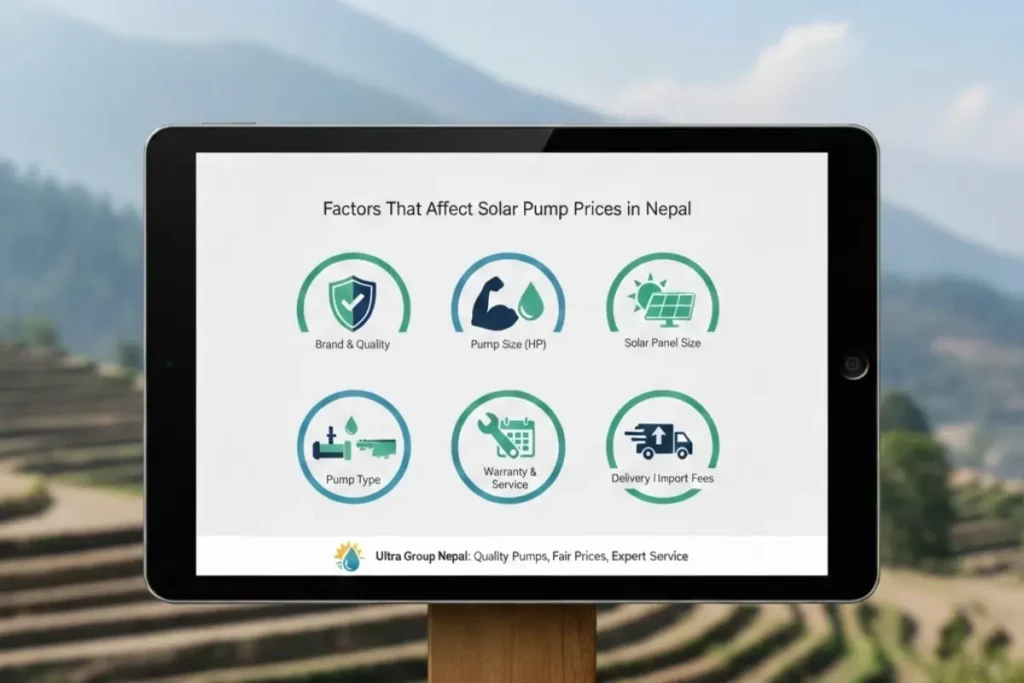
The price of a solar water pump in Nepal depends on a few important things, like the brand and quality, pump size, pump type, solar panel size, warranty and service, and delivery or import fees. Knowing these can help you pick the right pump for your farm, home, or business without going over your budget.
- Brand & Quality: Trusted brands like Ultra Group Nepal give pumps that last a long time.
- Pump Size (HP): Bigger pumps that move more water usually cost more.
- Pump Type: Submersible pumps are generally more expensive than surface pumps.
- Solar Panel Size: Bigger pumps need larger solar panels, which can make the price go up.
- Warranty & Service: Extra support or installation services might add a little to the cost.
- Delivery / Import Fees: Shipping, taxes, or import charges can also affect the total price.
With Ultra Group Nepal, you get high-quality solar water pumps at fair prices, plus professional installation and dependable after-sales service. This makes it easier to get the right solar water pump for your needs.
Recommended Read: What is the use of Solar Water Pump?
Solar Water Pump Price in Nepal
The price of solar water pump in Nepal varies widely depending on where and how you plan to use the pump. Small pumps designed for fountains and home gardens are very affordable, while larger systems made for farms or deep wells require higher investment.
The cost mainly changes based on pump size, solar panel capacity, water flow, lift height, and brand quality. Below is a clear overview of price ranges commonly seen in Nepal.
General Price Ranges in Nepal
Use Case | Price Range (NPR) | Ideal For |
Small Fountain or Garden Pumps | Rs. 1,000 – 10,000 | Home gardens, ponds, fountains |
1 HP Solar Pump System | Around Rs. 125,000 | Small farms and household irrigation |
2 HP Solar Pump System | Around Rs. 150,000 | Medium farming needs |
3 HP Solar Pump System | Rs. 250,000+ | Larger farms and high water demand |
Project-Based Installations | Around Rs. 221,000 | Examples include Gham Power 1.425 kW systems |
In simple terms: Small decorative pumps are inexpensive, while a complete irrigational setup generally starts around Rs. 125,000 for a 1 HP system and increases with capacity.
Recommended Read: How do Solar Water Pump Works?
Ultra Group Solar Pump Prices
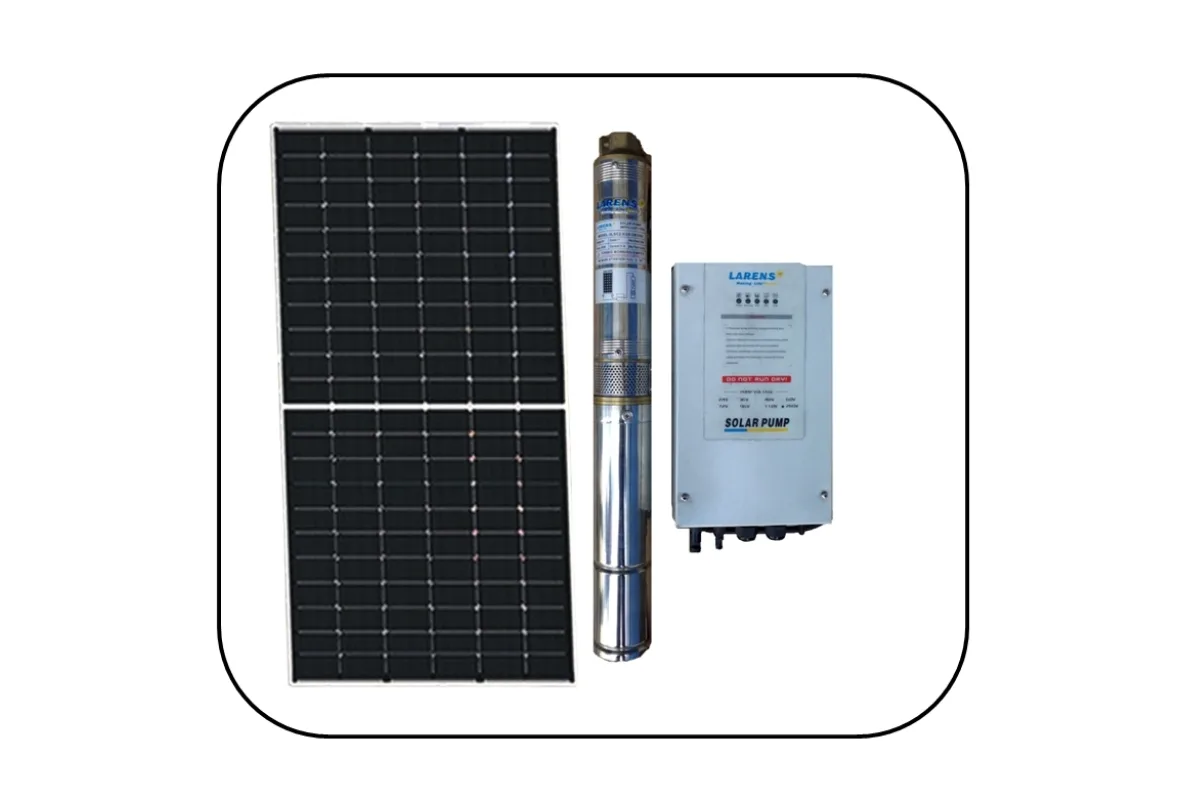
Ultra Group offers high-quality solar pumps suitable for Nepali homes, farms, and communities.
Model | Capacity | Original Price (NPR) | Current Price (NPR) | Best For |
Lubi Solar DC Pump | 2 HP | 163,775 | 147,398 | Small farms and household irrigation |
Larens Solar Pump | 3 HP | 118,750 | 118,750 | Medium farms and larger water supply needs |
Compared to brands like Ingco, Ultratec, Oswal, and others, Ultra Group delivers strong performance, dependable parts, and fair pricing.
Why Choose Ultra Group Nepal For Solar Water Pumps?
Ultra Group Nepal is trusted because the company offers pumps that perform well in real Nepali conditions, from dry Terai fields to hilly farmlands and remote villages. Ultra’s solar pumps are built to deliver strong water flow, run efficiently with sunlight, and require very little maintenance. Many farmers and households prefer Ultra because the pumps last longer, save money, and are backed by a reliable support team.
Ultra Group stands out in Nepal’s solar energy sector for the following reasons:
- Pioneering presence in Nepal’s solar sector since 1997
- ISO-certified for verified quality and performance
- Wide range of products suited for homes, farms, and industries
- Continuous innovation in technology and customer service
- Trusted reliability in Nepal’s challenging energy landscape
When you purchase from Ultra Group, you are not only buying a pump, you are choosing years of tested experience, professional installation, and long-term support.
Ready to find the right solar water pump for your needs? Contact Ultra Group Nepal for pricing, recommendations, and installation support.
Solar Water Pump vs Electric Pump: Which is Better for Price?
Solar water pump is the smarter choice when it comes to long-term cost. Although the initial purchase price can be slightly higher, solar pumps save you money over time because:
- No monthly electricity expense
- No diesel or fuel required
- Low maintenance costs
- Works during power cuts
- Longer operational life
When you compare total lifetime spending, a solar water pump becomes more affordable than an electric pump, making it ideal for farms, households, and commercial use in Nepal.
Final Thoughts
Solar water pumps are a cost-effective and future-ready choice for Nepal. The upfront price is usually higher than electric pumps, but long-term savings make it worth it.
On average, solar pumps cost around ₨ 125,000 for a 1 HP system, ₨ 150,000 for a 2 HP system, and ₨ 250,000 and above for a 3 HP system, depending on brand and configuration. You save money over time because there are no monthly electricity bills, less maintenance, and pumps continue to run even during load-shedding or blackout periods. When total ownership cost is considered, solar pumps can be much more economical than electric pumps.
Visit Ultra eStore to compare models, view current prices, and choose a pump that fits your needs and budget.
FAQs: Solar Water Pump Price in Nepal
Prices vary quite a bit based on the pump type and its capacity. Generally, you are looking at around ₨ 40,000 for small garden or fountain pumps. For larger agricultural setups designed for big farms, the price can go up to ₨ 250,000.
A 2 HP Lubi Solar Pump from Ultra Group Nepal usually sits at about ₨ 147,398 after discounts. It is a solid, reliable choice if you are looking to manage a small to medium farm or handle household irrigation.
For most homes, gardens, or small plots, a 1 to 2 HP pump is plenty. These sizes give you enough water for daily domestic needs without forcing you to install a massive, expensive solar panel array.
The upfront cost is definitely higher than a standard electric pump, but you have to look at the long game. Because you aren’t paying monthly electricity bills and maintenance is minimal, they actually end up being the cheaper, smarter option over time.
Yes, they do. Solar pumps can still run on cloudy or rainy days, though you will notice the water flow is a bit slower compared to when the sun is out in full force.
Absolutely. Solar pumps are more than capable of taking over for irrigation, home water supply, or livestock. They are a lifesaver in areas where the power grid is unreliable or totally non-existent.
They definitely do. Since you are using free energy from the sun, your electricity bills disappear. Pair that with very low maintenance costs, and it becomes a very sustainable investment for both farmers and homeowners.


