


Solar water pumps work by turning sunlight into electricity using solar panels. These panels collect energy from the sun and change it into electric power, which runs the pump motor. The pump then moves water from places like a well, river, or storage tank to where it is needed, such as for farming, drinking, or animals.
Unlike normal pumps that need electricity or fuel, solar water pumps run fully on renewable energy. This makes them better for the environment and cheaper over time. They can work in faraway places where there is no electricity, helping farmers, communities, and families get a steady supply of water.
What Is a Solar Water Pump and Its Components?
A solar water pump is a system that uses solar energy to move water from one place to another. It works by turning sunlight into electricity, which runs a pump to lift or move water easily.
Solar water pumps are used in many different places:
- Irrigation: Giving water to crops and farmland.
- Borewells: Pulling water from deep underground wells.
- Livestock: Supplying drinking water for animals.
- Households: Providing a steady water supply in areas without electricity or in remote places.
Key Components of a Solar Water Pump System
- Solar Panels (PV Modules): Collect sunlight and turn it into electricity to run the system.
- Controller / MPPT Unit: Controls the voltage and current from the solar panels so the pump works properly.
- Pump (Submersible or Surface): Moves water from the source to where it is needed.
- Motor (DC or AC): Powers the pump using the electricity made by the solar panels.
- Mounting Structure & Wiring: Holds the solar panels in place and makes sure all electrical connections work well.
- Optional: Battery and Inverter Setup: Stores extra energy so the pump can work during low sunlight or at night.
How does Each Component support the Working Mechanism?
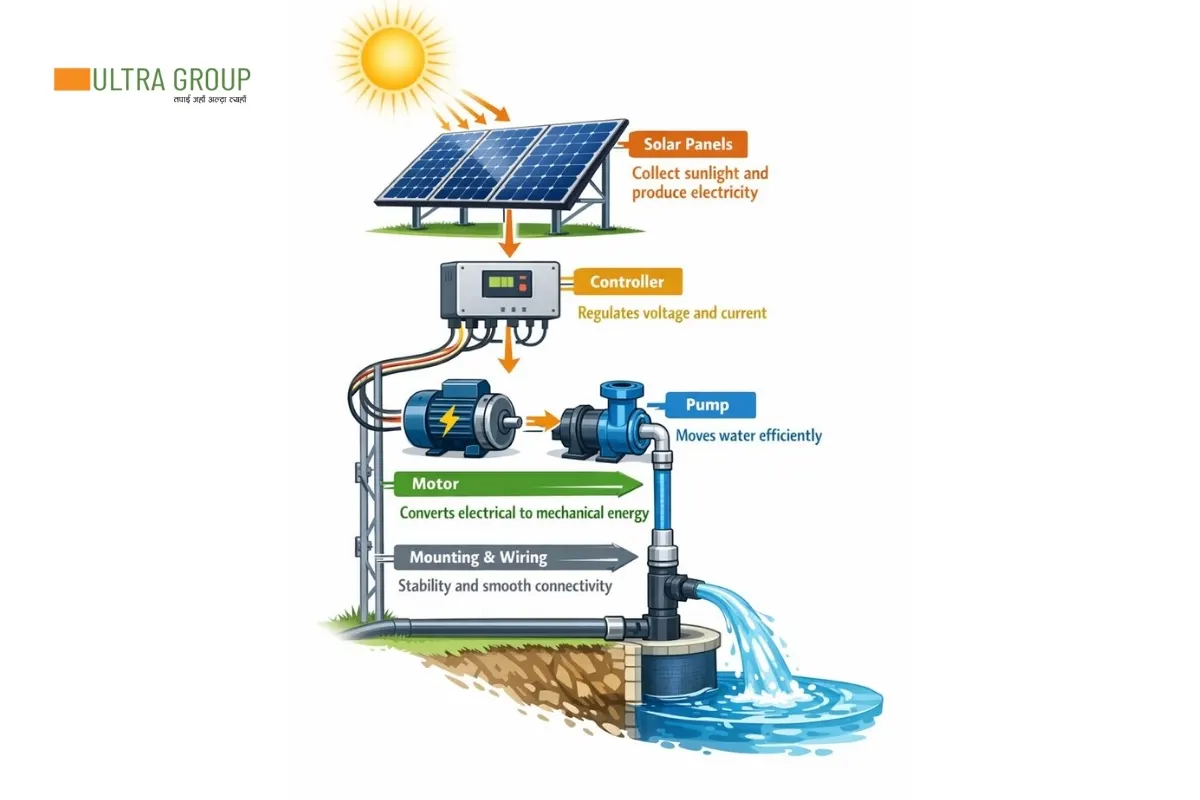
- Solar Panels → Electrical Power: Collect sunlight and produce electricity for the pump.
- Controller → Voltage and Current Regulation: Makes sure the pump gets the correct amount of power to work smoothly.
- Pump → Electrical to Hydraulic Energy Conversion: Uses electricity to lift and move water properly.
- Motor → Drives the Pump: Changes electrical energy into mechanical energy to run the pump.
- Mounting Structure & Wiring → Stability and Connectivity: Keeps the system stable and allows electricity to flow smoothly through the setup.
Use a solar water pump the right way to improve efficiency, save energy, and maintain a steady and reliable water supply.
How Do Solar Water Pumps Work? (Step-by-Step Explained)
Solar water pumps work in a clear set of steps. They turn sunlight into electricity and then use that power to move water. Here is the step-by-step process:
Step 1: Solar Panels Capture Sunlight
Solar panels, also called photovoltaic (PV) modules, collect sunlight and change it into electricity. The amount of electricity depends on how strong the sunlight is. More sunlight means more power. PV panels are made to work well even when the weather changes, so the pump keeps getting a steady supply of energy.
Step 2: Controller Regulates and Optimizes Power
The controller, which often has MPPT (Maximum Power Point Tracking) technology, controls and improves the electricity coming from the solar panels. It makes sure the pump gets the right voltage and current to work properly. The controller also protects the system by preventing problems like too much voltage, too much current, or the pump running without water, which helps keep everything safe.
Step 3: Motor Converts Electricity to Mechanical Pumping
The motor gets electricity from the controller and changes it into mechanical energy to run the pump. The motor can be DC or AC, depending on the system. The motor speed, measured in RPM, can change based on how strong the sunlight is, which affects how well the pump works and how much water flows.
Step 4: Pump Lifts and Delivers Water
In the final step, the pump moves water from the source to where it is needed.
- Submersible Pump: This pump is used for deep borewells. It works underwater and pushes water up to the surface.
- Surface Pump: This pump is used for shallow water sources. It pulls water from open wells, rivers, or tanks.
The amount of water the pump moves and how high it lifts the water depend on the motor’s power and how much sunlight is available, making sure the right amount of water reaches the right place.
Do Solar Water Pumps Require a Battery?

Solar water pumps can work with or without a battery. This depends on what the system is used for, where it is installed, and how much water is needed. Batteries store extra energy for times when there is not enough sunlight, but they are not always needed.
When Batteries Are Not Required
- Direct PV to Pump Operation: The pump runs straight on electricity made by the solar panels.
- Daytime Irrigation: Best for farms or fields that only need water during the day.
- Higher Efficiency: Running the system without a battery avoids energy loss that happens when electricity is stored and converted.
When Batteries Are Useful
- Morning or Evening Pumping: Allows the pump to work early in the morning or later in the evening.
- Cloudy or Low-Sunlight Areas: Helps keep a steady water supply when sunlight is weak.
- Domestic Use Requiring Constant Water Pressure: Supports homes that need water all day.
- Off-Grid Households: Gives reliable water access in places without grid electricity.
Pros and Cons of Using a Battery in a Solar Pump System
Pros:
- Keeps a steady water supply during low sunlight or at night
- Allows the pump to run without stopping for important uses
Cons:
- Raises the system cost and needs regular maintenance
- Slightly lowers overall efficiency because of energy storage and conversion losses
Best Solar Water Pump in Nepal

Finding the right solar water pump in Nepal is important if you want a system that works well, lasts a long time, and doesn’t cause problems again and again. With Nepal’s mountains, hills, and plains, you need a pump that can handle different land and weather conditions. A good-quality pump saves energy and also makes sure you have water whenever you need it.
Why Choosing the Right Brand Matters
Choosing the right brand really matters. A reliable brand gives you:
- Efficiency: The pump uses sunlight properly to give the most water possible.
- Durability: Strong pumps that can handle rough weather and regular use.
- Local Service Support: Easy access to technicians if something stops working.
- Spare Parts Availability: Fast replacements so you don’t have to wait long for water.
One of the most trusted names in Nepal is Ultra Group Nepal. We provide solar water pumps that are:
- High-Efficiency Systems: Made to use sunlight well for better water output.
- Submersible and Surface Options: Suitable for deep borewells and shallow water sources.
- Tested for Nepal’s Terrain: Pumps that work smoothly in mountains, hills, and plains.
- Strong After-Sales Support: Help with setup, maintenance, and any problems.
- Versatile: Ideal for farming, irrigation, livestock, and home water needs.
Ready to upgrade your water supply with Nepal’s leading company? Visit Ultra eStore today to explore and purchase the best solar water pumps for your home or farm!
What Makes Ultra Group Nepal Stand Out?
Ultra Group Nepal stands out because it focuses on quality and reliability:
- Certified Components: Every part is tested to make sure it lasts long and works well over time.
- Expert Installation Team: Makes sure your system is installed correctly for the best performance.
- High Lifting Capacity: Easily handles deep wells and large water needs.
- Reliable in Remote Areas: Even in rural places, the pumps keep water flowing regularly.
With a solar water pump from Ultra Group Nepal, you get a steady water supply without worrying about electricity bills or frequent problems. It is a smart choice for farmers, households, and anyone who needs a reliable water solution.
Final Thoughts
Solar water pumps are an efficient and eco-friendly way to move water by using sunlight to make electricity that runs a pump. The idea is simple, but it works very well, giving a reliable water supply without depending on grid electricity or fuel.
In Nepal, these pumps are especially good for rural areas and farming. They can work across different landscapes, from mountains to plains, and help with irrigation, watering animals, and home water needs.
By using solar energy, they provide a long-term solution that lowers costs, saves energy, and helps protect the environment. You can contact Ultra Group Nepal to find the best solar water pump in Nepal.
FAQs
Solar pumps need direct sunlight to work best. Most pumps run well during sunny hours, and how much water they pump depends on how strong the sunlight is.
Yes, solar pumps can be used for borewells. Submersible solar pumps are made to lift water from deep wells in an efficient way.
With correct installation and regular care, solar water pumps can last 10–15 years or even longer. Good-quality parts and proper servicing help them last longer.
Surface pumps are installed above the ground and pull water from shallow sources like rivers, ponds, or tanks. Submersible pumps are placed underwater in wells or borewells and can lift water from much deeper levels.
Yes, solar water pumps can be used with drip and sprinkler irrigation systems. They provide a steady flow of water for proper crop watering.
Yes, cloudy weather can reduce pump performance because there is less sunlight. In these situations, optional battery systems or pumps made for low-light conditions can help keep the water supply going.


